Jump to recipe here
If you’ve never made a hot water pie crust before, you’re in for a treat. This isn’t your typical chilled butter dough—it’s an old-fashioned, no-fuss recipe that’s been around for generations.
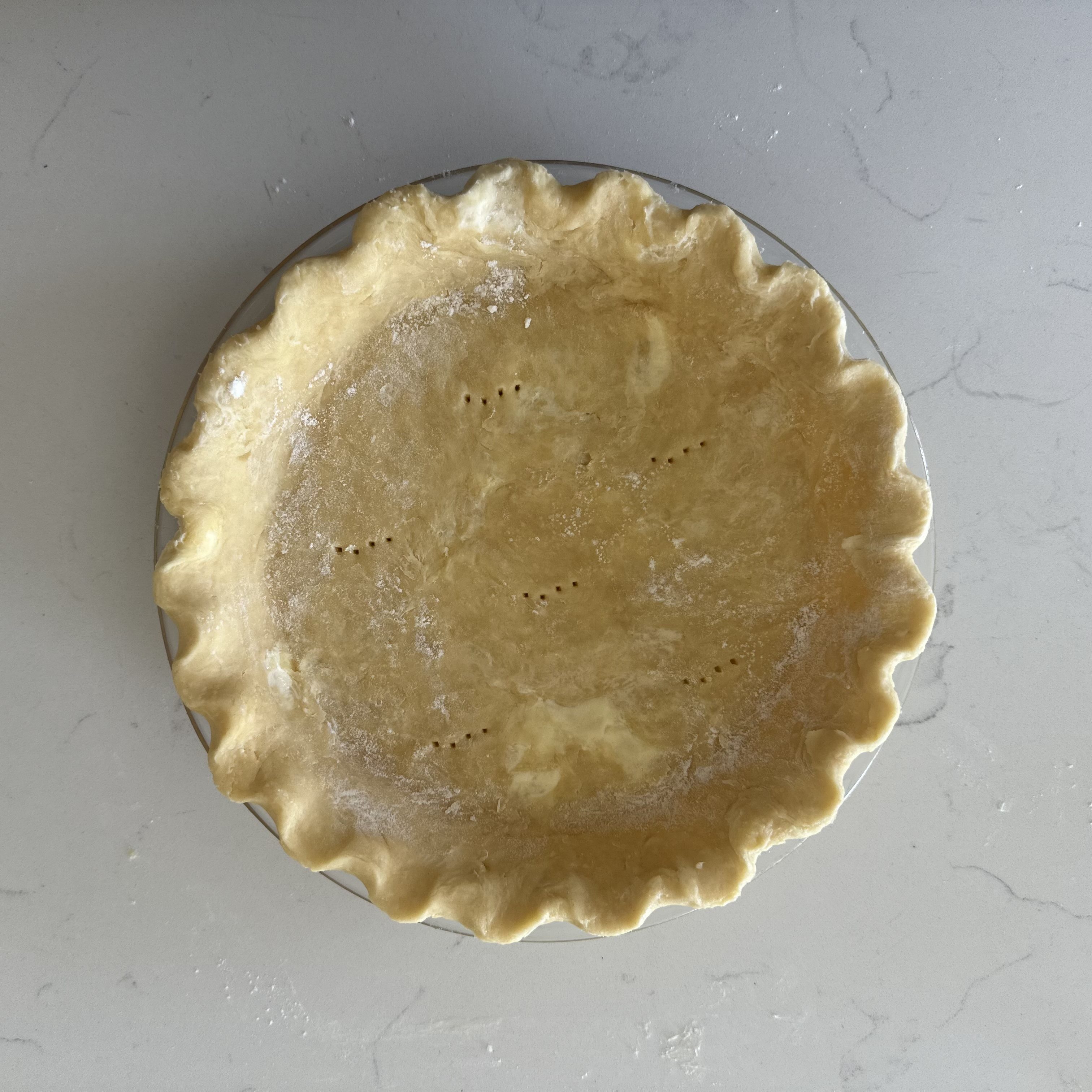
Hot water crust is holds its shape so well and is great for any hearty filling. It’s easy to work with, doesn’t tear easily, and bakes up beautifully golden and crisp. This recipe has that comforting, old-school feel—like something you’d find scribbled on a recipe card with flour smudges in the corners. Whether you’re making hearty pies, or just looking to try something a little different, this easy, hot water pie crust might surprise you—in the best way.
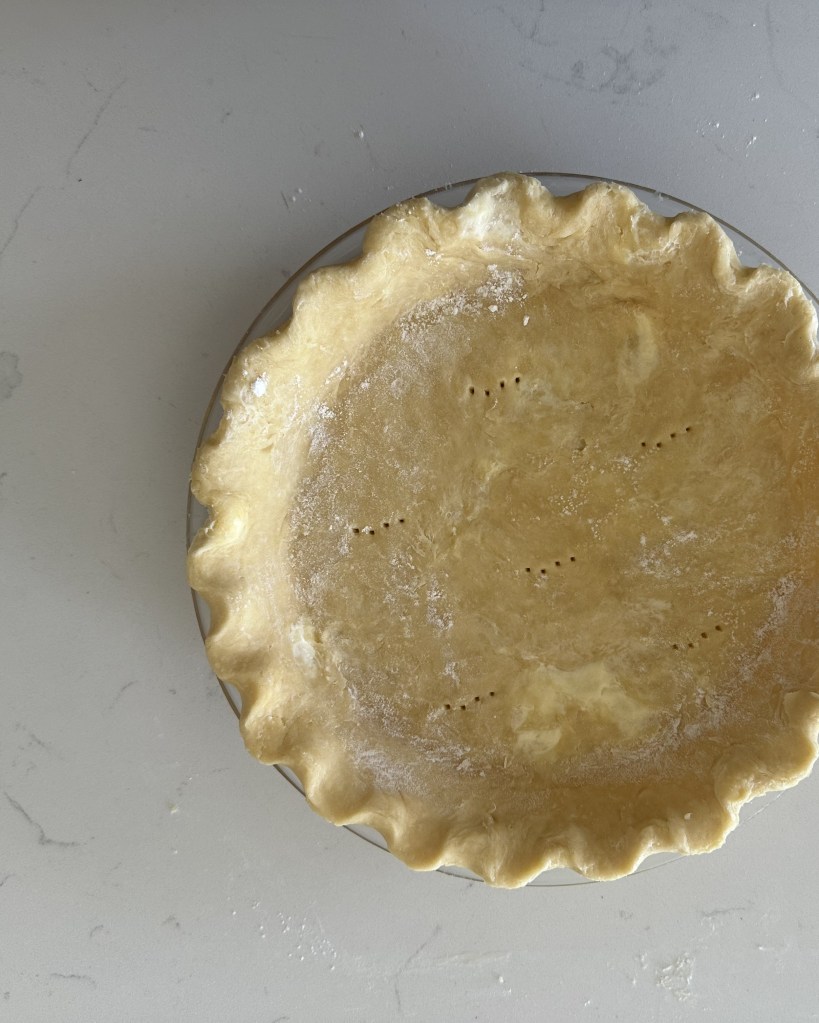
The first time I made this recipe, I had been asked to bring a pie to Thanksgiving. It was the first time I had ever made a pie from scratch and to top it off – I was taking it to my in-laws. I had never made pie before that wasn’t a crushed Oreo crust and chocolate pudding, let alone made a pie crust from scratch. It always felt a little intimidating, like something only real bakers did. But one day, I called my grandma and asked her for her best (and easiest) pie crust recipe and ended up with this.
She gave me the recipe over the phone, the way grandmas do. I scribbled it all down on a napkin and decided to just go for it. The dough came together like magic—warm, soft, and shockingly easy to roll out, even for a total beginner like me.
That first pie was nothing fancy—just a simple pumpkin pie with store bought filling—but I remember pulling it out of the oven and feeling so proud. The crust was golden and held its shape beautifully. It was sturdy but tender, exactly what I hoped for. And as I took that first bite, I couldn’t help but smile.
Now, this is my go-to pie crust. I’ve come to LOVE making pies and every time I do, I think of my grandma and her quiet confidence that I could do it. Turns out, she was right. I could make pie crust—I just needed the right one to start with.
Which fat is best for pie crusts?
The choice between butter, shortening, or lard in a pie crust significantly affects both texture and flavor. Butter, with its rich, creamy taste, creates a crust that’s flavorful and slightly crisp, but it has a lower melting point, which can make the dough trickier to work with. Shortening, on the other hand, has a higher melting point and lacks water content, which helps produce an exceptionally tender and flaky crust, though it lacks the depth of flavor that butter provides. Lard offers the best of both worlds in terms of flakiness and tenderness, thanks to its unique fat structure, and imparts a subtle savory note—ideal for savory pies but sometimes less desirable in sweet ones. Many bakers opt for a combination of fats to balance flakiness, tenderness, and flavor.
Kaylie’s tips:
- I like to cut my butter into cubes while cold and then let it sit out at room temperature while getting the other ingredients ready.
- You can always use shortening or lard in place of butter. It’s a 1:1 ratio. I’ve used all 3 and they all make a delicious, flaky crust!
- Let your egg sit out at room temperature for a little while before making your crust. The closer to room temperature it is before adding it to the water, the less likely the water is to cook the egg before the crust is fully mixed!
- I’ve found it easier to brush the egg white on after I beat it. It helps it stick together less and brushes more like butter.
Check out our storefront here to see our list of recommended brands and supplies



Leave a Reply